Augustine’s childhood in Michigan
Augustine’s Childhood
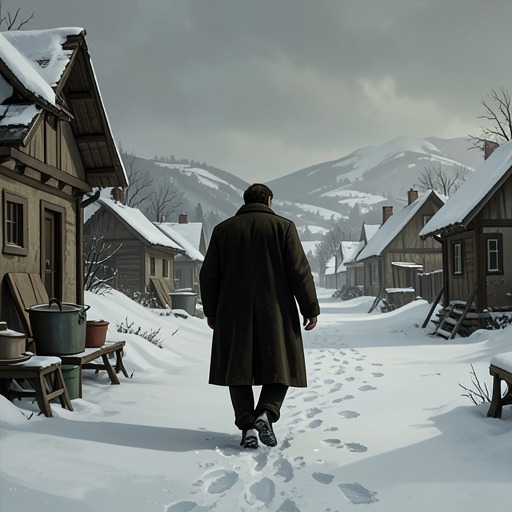
[Augustine](entity:character-recall-character-augustine-3c38296a125e) grew up in [Michigan](entity:location-recall-location-michigan-226fa2d06794) in a household shaped by his mother’s shifting moods and his father’s anger. He learned to watch his mother closely, adapting himself to her needs and believing that understanding her might let him protect her.
That early role made care feel like a problem to solve rather than a bond to share. His father resented the closeness between mother and son, while Augustine’s efforts to manage the household left him with an enduring sense that love depended on vigilance.
When Augustine was eleven
A Mother in Bed
During the winter [Augustine](entity:character-recall-character-augustine-3c38296a125e) turned eleven, his mother stayed in bed until spring. His father berated her, and Augustine discovered that no amount of attention or ingenuity could bring her back to herself.
He retreated to the basement, where electronic circuits offered a kind of clarity that human feeling did not. The failure to understand his mother helped turn curiosity into a refuge and encouraged the distance from other people that would mark his adult life.
Augustine’s early adolescence
The Basement Radio
In the basement, [Augustine](entity:character-recall-character-augustine-3c38296a125e) taught himself to build receivers and transmitters from scavenged parts. He learned the radio bands, assembled antennas, and sent calls into the air, waiting for a stranger to answer.
Those brief exchanges gave him a controlled version of connection: he could establish that someone was there without needing to know them. The practice later became a source of comfort and, after civilization fell silent, the means by which he would reach another human being.
Augustine’s adolescence
The Hospital Visit
As a teenager, [Augustine](entity:character-recall-character-augustine-3c38296a125e) watched two men escort his mother into a locked hospital ward while his father dealt with the paperwork. Later visits showed him a mother subdued by medication and illness, beyond the influence he had once imagined he possessed.
The experience deepened his retreat into observation and self-reliance. He carried the memory forward without learning how to turn concern into a lasting, mutual relationship.
About ten years after Augustine’s father died
His Father’s Death
After his father’s death, [Augustine](entity:character-recall-character-augustine-3c38296a125e) went to the grave and kicked the tombstone until he broke a toe. The act released some of the anger that had accumulated through years of intimidation and belittlement.
By then he had become a gifted student, but intellectual ability had not repaired the damage at home. His ambition grew alongside an instinct to leave rather than confront the people and places that hurt him.
Augustine’s college years
Early Romantic Experiments
In college, [Augustine](entity:character-recall-character-augustine-3c38296a125e) discovered that two women in his thermodynamics class were attracted to him. He began treating romance as an experiment, pursuing them in quick succession and watching the hurt and rivalry that followed.
Rather than feeling responsible, he considered the experiment informative. This pattern developed into deliberate seduction and abandonment, reinforcing his belief that human intimacy was an object to study rather than a commitment to honor.
From Augustine’s twenties through his thirties
A Career of Departures
[Augustine](entity:character-recall-character-augustine-3c38296a125e) built a formidable scientific reputation while moving between observatories and research posts around the world. His work was ambitious and groundbreaking, but whenever a place or relationship became difficult, he packed his leather suitcase and left.
He pursued recognition and a place in scientific history, convinced that discovery mattered more than ordinary attachments. His achievements gave him purpose, but they also helped him avoid reckoning with the people he had hurt.
Sully’s childhood at the Goldstone Deep Space Network facility
Sully’s Desert Childhood
[Sully](entity:character-recall-character-sully-099513b10c0e) grew up with her mother, [Jean Sullivan](entity:character-recall-character-jean-sullivan-44f4b7618845), at the [Goldstone Deep Space Network facility](entity:location-recall-location-goldstone-deep-space-8702b0bfe1f3) in the [Mojave Desert](entity:location-recall-location-mojave-desert-f0064ffdf1f2). [Jean](entity:character-recall-character-jean-3b22ff98bd2e) worked long hours in signal processing, and Sully learned to wait in her office, content to be near her even when her attention was elsewhere.
Jean taught Sully solitaire and took her into the desert to look through a telescope. The stars became both a shared inheritance and a consolation for a childhood in which Sully often longed for more of her mother’s time.
Sully’s childhood before Jean remarried
A Father Made Mythic
When [Sully](entity:character-recall-character-sully-099513b10c0e) asked about her absent father, [Jean](entity:character-recall-character-jean-3b22ff98bd2e) described him as brilliant and devoted to work, too large for one family. She told her daughter that the world needed him and that the two of them were the right size for each other.
The story framed absence as a noble calling. Sully learned to admire sacrifice and scientific work, without knowing that the absent man was [Augustine](entity:character-recall-character-augustine-3c38296a125e) or that his choices had shaped her life from the beginning.
When Sully was ten and eleven
Jean’s New Family
When [Sully](entity:character-recall-character-sully-099513b10c0e) was ten, [Jean](entity:character-recall-character-jean-3b22ff98bd2e) married her former sweetheart and moved the family to Canada. Twins arrived soon afterward, and Jean left her scientific work to care for them.
Sully experienced the change as a loss of the relationship and shared purpose she had treasured. She eventually went away to boarding school, then left for college in the United States, carrying both admiration for Jean’s work and resentment at being displaced.
Sully’s adolescence in Canada
The Telescope Alone
After moving to Canada, [Sully](entity:character-recall-character-sully-099513b10c0e) sometimes carried the telescope outside by herself. The view was obstructed by trees, and the stars felt less clear without [Jean](entity:character-recall-character-jean-3b22ff98bd2e) beside her, but the familiar constellations still gave her a map of the sky.
The solitary stargazing preserved Sully’s connection to her childhood while preparing her to find meaning in distance. It also foreshadowed how often she would use the cosmos to endure isolation rather than repair it.
Before Sully completed college
Jean’s Death
[Jean](entity:character-recall-character-jean-3b22ff98bd2e) died after surgery following the stillbirth of her fourth child. [Sully](entity:character-recall-character-sully-099513b10c0e) did not reach her in time and, at the funeral, felt like an orphan among the family that remained.
The death ended Sully’s hope that she and Jean might return to the closeness of their desert years. The loss later resurfaced in space, where Sully confronted how much of her life had been shaped by departures she had both suffered and chosen.
Sully’s adult life before astronaut training
Sully’s Marriage and Lucy
[Sully](entity:character-recall-character-sully-099513b10c0e) married [Jack](entity:character-recall-character-jack-b5a26722c3ea), and they had a daughter, [Lucy](entity:character-recall-character-lucy-680a57cd8fba). Their early family life included ordinary, vivid scenes that Sully later struggled to summon clearly: a home, shared trips, and Jack holding their infant daughter.
Sully loved her family, but she did not always know how to meet their emotional needs. Her work and inwardness strained the marriage, and the eventual separation left her carrying both genuine affection and unresolved resentment.
During Sully and Jack’s marriage
The Lost Pregnancy
[Sully](entity:character-recall-character-sully-099513b10c0e) experienced an early miscarriage. When she saw the blood, she felt relief, while [Jack](entity:character-recall-character-jack-b5a26722c3ea) was visibly disappointed; she held his head in her lap but could not make herself feel the grief she saw in him.
The moment exposed a distance between them that neither could easily bridge. Sully’s difficulty recognizing or expressing emotion became part of the larger fracture in her marriage and her complicated understanding of motherhood.
After Sully and Jack began living separately
Sully Joins the Space Program
[Sully](entity:character-recall-character-sully-099513b10c0e) accepted a place in astronaut training and moved to [Houston](entity:location-recall-location-houston-bb963be7f802), leaving [Jack](entity:character-recall-character-jack-b5a26722c3ea) and five-year-old [Lucy](entity:character-recall-character-lucy-680a57cd8fba) behind. Jack told Lucy about the decision because Sully could not bring herself to explain that she would voluntarily be away for years.
The choice fulfilled the calling Sully had inherited from [Jean](entity:character-recall-character-jean-3b22ff98bd2e), but it also deepened the separation from her family. She would later question whether the work justified the sacrifice, even while recognizing that she would make the same choice again.
When Augustine was thirty-seven
Augustine Meets Jean
At the [Karl G. Jansky Very Large Array](entity:location-recall-location-karl-g-jansky-6b62a30c399c) in [Socorro](entity:location-recall-location-socorro-e0f000c72af0), [Augustine](entity:character-recall-character-augustine-3c38296a125e) met [Jean](entity:character-recall-character-jean-3b22ff98bd2e), a younger scientist finishing her doctoral work. Unlike the women he had treated as experiments, Jean unsettled him and seemed impossible to reduce to a subject he could observe from a distance.
Their relationship became one of the rare moments when Augustine felt more than curiosity or appetite. He could not manage that feeling, however, and his old habits of control and escape soon took over.
After Jean told Augustine she was pregnant
Augustine Rejects Fatherhood
When [Jean](entity:character-recall-character-jean-3b22ff98bd2e) told [Augustine](entity:character-recall-character-augustine-3c38296a125e) she was pregnant, he tried to persuade her to have an abortion. She refused, and Augustine left the hemisphere rather than remain near a child he believed he could not love.
The decision turned fear into abandonment. Although he later sent gifts and occasional money, his gestures never became a relationship, and he allowed the distance to grow until he lost track of Jean and their daughter.
After Sully moved to Houston
Sully’s Early Astronaut Years
[Sully](entity:character-recall-character-sully-099513b10c0e) trained as an astronaut while her relationship with [Jack](entity:character-recall-character-jack-b5a26722c3ea) continued to deteriorate. After their divorce, she returned from an early space mission to find that [Lucy](entity:character-recall-character-lucy-680a57cd8fba) was loved and cared for by Jack and his new partner, and that Sully had become peripheral to the family’s daily life.
She understood that her daughter was safe, but the realization that she had been replaced wounded her. Her professional success could not resolve the conflict between the life she had chosen and the family intimacy she had failed to sustain.
During Aether’s training in Houston
The Astronaut Crew Forms
[Sully](entity:character-recall-character-sully-099513b10c0e) joined [Tal](entity:character-recall-character-tal-9a9d333f34ea), [Ivanov](entity:character-recall-character-ivanov-39ae43bf94fa), [Devi](entity:character-recall-character-devi-db6e56e36e05), and [Thebes](entity:character-recall-character-thebes-ec2f9c4a4cb1) in preparing for the deep-space mission. [Gordon Harper](entity:character-recall-character-gordon-harper-b5fd5a668423) arrived after receiving separate commander training and quickly helped the crew feel at ease.
The group built its bond through demanding simulations, shared meals, jokes, and long conversations. [Harper](entity:character-recall-character-harper-85bd978cde73)’s attentiveness would later help hold the crew together when the systems and routines that had connected them to [Earth](entity:location-recall-location-earth-a6b883af9147) disappeared.
In the weeks before Aether’s launch
The Galilean Moon Toast
After a day of training, the crew went out for drinks and toasted the Galilean moons. They sang along to [Space Oddity](entity:expression-recall-expression-space-oddity-7f02563c897e), danced, and briefly felt less like colleagues preparing for a historic mission than a close-knit group with a shared future.
The celebration became one of the memories [Sully](entity:character-recall-character-sully-099513b10c0e) carried into the long isolation of space. Its warmth contrasted with the later breakdown of routine and with the losses the crew would face before reaching home.
At the start of the two-year mission
Aether Leaves Earth
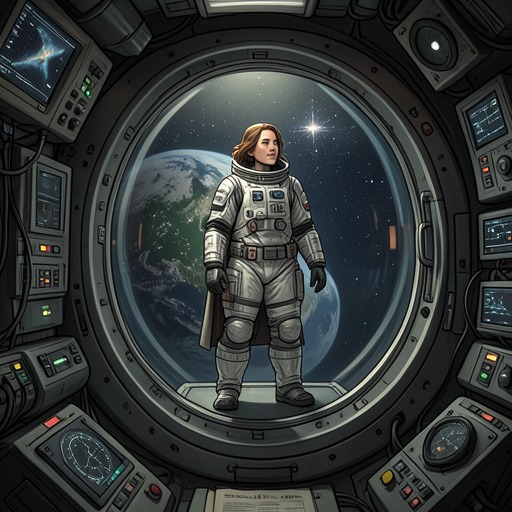
[Aether](entity:location-recall-location-aether-7d7cf19c0007) departed [Earth](entity:location-recall-location-earth-a6b883af9147) on its unprecedented journey toward [Jupiter](entity:location-recall-location-jupiter-9753c36d1bfd), with six crew members and a carefully structured schedule designed to keep them physically and psychologically prepared. [Sully](entity:character-recall-character-sully-099513b10c0e) left behind [Jack](entity:character-recall-character-jack-b5a26722c3ea) and [Lucy](entity:character-recall-character-lucy-680a57cd8fba), carrying only one photograph of her daughter.
The mission fulfilled Sully’s ambition and the crew’s scientific purpose, but the separation also made her family’s absence harder to feel as an abstraction. The ship became their temporary home and the only community they could depend on.
About twelve years before the present mission
Sully’s First Spaceflight
On an earlier mission aboard the [International Space Station](entity:location-recall-location-6f0a920472b1), [Sully](entity:character-recall-character-sully-099513b10c0e) endured a commander who directed her constantly during an exterior repair. She stayed quiet because she was inexperienced and hoped to be considered for [Aether](entity:location-recall-location-aether-7d7cf19c0007)’s crew.
From the station she could sometimes see Aether being assembled in orbit. The sight made the future mission feel like a place in history, strengthening Sully’s determination even as she remained unsure what that ambition would cost her family.
Near the midpoint of Aether’s outbound journey
The Jupiter Survey
[Aether](entity:location-recall-location-aether-7d7cf19c0007) reached [Jupiter](entity:location-recall-location-jupiter-9753c36d1bfd) and surveyed its moons, with the crew studying the planet’s storms and the varied worlds of [Callisto](entity:location-recall-location-callisto-1d2518e34e86), [Ganymede](entity:location-recall-location-ganymede-05fdb2309434), [Europa](entity:location-recall-location-ea2231895f05), and [Io](entity:location-recall-location-io-00a998c074a2). The experience left the astronauts awed by the scale and beauty of the Jovian system.
The crew felt their earthly concerns recede, and [Sully](entity:character-recall-character-sully-099513b10c0e) found renewed peace with the sacrifices she had made. The survey seemed to give their mission a meaning larger than personal ambition, just as contact with [Earth](entity:location-recall-location-earth-a6b883af9147) was about to vanish.
During Aether’s survey of Jupiter’s moons
Earth Falls Silent
Mission Control stopped responding while [Aether](entity:location-recall-location-aether-7d7cf19c0007)’s crew was surveying the Jovian system. The astronauts checked their communications equipment and listened across the assigned bands, but the probes still transmitted and the ship could receive signals from space; only [Earth](entity:location-recall-location-earth-a6b883af9147) was silent.
At first, the crew treated the outage as a temporary technical problem. As days became weeks without contact, the silence began to suggest a global catastrophe and undermined the shared purpose that had sustained them.
During the first weeks of the blackout
Voyager’s Faint Signal
While scanning the radio bands, [Sully](entity:character-recall-character-sully-099513b10c0e) sometimes detected the weak transmission of [Voyager 3](entity:object-recall-object-voyager-3-c3fcbfc13e27), a fading human-made probe drifting beyond the solar system. Its signal reminded her of the immense distances she had once found exhilarating and of the possibility of continuing without a destination.
The probe became a companion in the silence, a small sign that human activity persisted beyond the ship. Sully’s attachment to its failing transmissions later gave her a way to understand both loss and release.
Several weeks into the blackout
The Crew Begins to Unravel
Without updates from Mission Control, the crew gradually abandoned its sleep, exercise, and meal schedules. [Ivanov](entity:character-recall-character-ivanov-39ae43bf94fa) withdrew into his laboratory, [Tal](entity:character-recall-character-tal-9a9d333f34ea) lost himself in video games, and [Devi](entity:character-recall-character-devi-db6e56e36e05) became increasingly disengaged from both the ship and her colleagues.
[Harper](entity:character-recall-character-harper-85bd978cde73) tried to keep the crew connected, while [Sully](entity:character-recall-character-sully-099513b10c0e) attempted to help Devi and monitor the others. Their shared experience of [Jupiter](entity:location-recall-location-jupiter-9753c36d1bfd) had briefly brought them together, but the prolonged uncertainty revealed how much they had depended on [Earth](entity:location-recall-location-earth-a6b883af9147) for structure and reassurance.
During the first months of the blackout
Sully Remembers Her Family
As the journey home stretched ahead, [Sully](entity:character-recall-character-sully-099513b10c0e) began replaying memories of [Lucy](entity:character-recall-character-lucy-680a57cd8fba) and [Jack](entity:character-recall-character-jack-b5a26722c3ea): their homes, their ordinary routines, the miscarriage, the divorce, and the day she left for [Houston](entity:location-recall-location-houston-bb963be7f802). She could recall rooms and objects more easily than the faces of the people she missed.
The recollections forced her to confront that her family had been difficult to love well even before she left. The more she tried to reconstruct the past, the more clearly she felt the cost of the choices that had brought her into space.
About a year before Aether’s launch
Ivanov’s Family at Dinner
In [Houston](entity:location-recall-location-houston-bb963be7f802), [Sully](entity:character-recall-character-sully-099513b10c0e) once saw [Ivanov](entity:character-recall-character-ivanov-39ae43bf94fa) having dinner with his wife and children at an outdoor café. He cut food for one of his daughters while the family laughed together, a warmth different from the severity he usually showed at work.
The scene made Sully think about her own family and the distance between professional purpose and domestic presence. Later, in space, Ivanov’s photographs of his family would reveal how much he too had left behind.
During the asteroid-belt passage
Devi Shares Her Dream
[Devi](entity:character-recall-character-devi-db6e56e36e05) told [Sully](entity:character-recall-character-sully-099513b10c0e) about a recurring dream of eating with her family in Kolkata. The dream began in the colors and smells of her mother’s kitchen, then ended with Devi waking to the certainty that everyone she loved was gone.
The confession showed how deeply the blackout had entered the crew’s private lives. Sully stayed beside Devi and shared her grief, even though she could not offer the certainty that either of them would see home again.
During the crew’s isolation in deep space
Thebes Teaches Presence
[Sully](entity:character-recall-character-sully-099513b10c0e) asked [Thebes](entity:character-recall-character-thebes-ec2f9c4a4cb1) how he had survived the loss of his family. He explained that he was broken too, but tried to live one task and one moment at a time rather than become consumed by what could not be changed.
His advice offered Sully a practical way to endure: brushing her teeth, repairing equipment, or speaking with a crewmate could bring her back to the present. It did not erase grief, but it gave her a way to remain functional inside it.
During the return journey before the antenna failure
Harper and Sully Grow Closer
[Harper](entity:character-recall-character-harper-85bd978cde73) and [Sully](entity:character-recall-character-sully-099513b10c0e) played cards and talked about the people and places they missed. Sully learned that Harper longed for his dog, Bess, while he listened to her speak about [Lucy](entity:character-recall-character-lucy-680a57cd8fba), [Jean](entity:character-recall-character-jean-3b22ff98bd2e), and the childhood she had spent waiting for her mother’s attention.
Their friendship carried a growing intimacy neither named directly. When Harper asked Sully to visit him after the mission, the imagined home gave her a momentary sense of belonging, even though neither knew what [Earth](entity:location-recall-location-earth-a6b883af9147) would be like when they arrived.
Several months before Aether reaches Earth
The Main Dish Breaks Away
A sudden impact tore [Aether](entity:location-recall-location-aether-7d7cf19c0007)’s main communications dish from the spacecraft. The crew had been unable to reach [Earth](entity:location-recall-location-earth-a6b883af9147) even before the accident, but the loss also cut off the signals from the probes they had left in the Jovian system.
The damage gave the astronauts a concrete problem to solve after months of helpless waiting. [Sully](entity:character-recall-character-sully-099513b10c0e) and the engineers began designing a replacement from spare components, with the repair requiring dangerous exterior work.
Two days after the replacement antenna was completed
The First Repair Walk
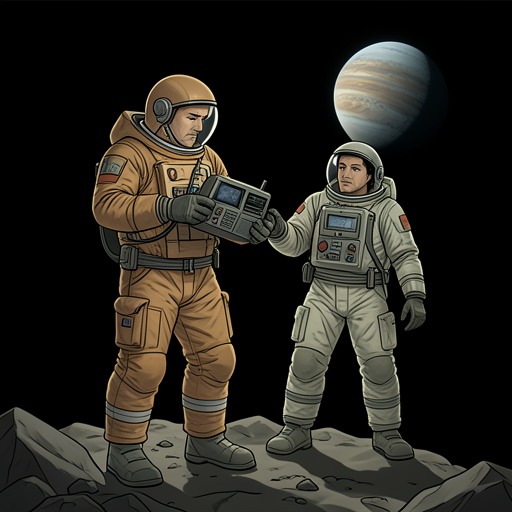
[Sully and Devi](entity:relation-recall-relation-sully-and-devi-c623a050152f) went outside to inspect the damaged installation site and prepare it for the replacement dish. The work took hours, but both astronauts completed the first spacewalk safely and returned to [Aether](entity:location-recall-location-aether-7d7cf19c0007) with a workable plan.
The successful outing revived the crew’s confidence and restored some of the camaraderie that had faded during the blackout. [Harper](entity:character-recall-character-harper-85bd978cde73) remained worried about [Devi](entity:character-recall-character-devi-db6e56e36e05)’s emotional state, but the renewed work gave everyone a reason to focus on the next task.
During the second antenna-repair spacewalk
Devi Dies on the Second Walk
During the longer installation walk, [Devi](entity:character-recall-character-devi-db6e56e36e05)’s suit scrubber failed and carbon dioxide levels rose as its oxygen supply dropped. [Sully](entity:character-recall-character-sully-099513b10c0e) saw that Devi was losing consciousness, but the failure became fatal before she could get her back to the airlock.
[Harper](entity:character-recall-character-harper-85bd978cde73) guided Sully through securing the antenna one bolt at a time. Sully then detached Devi’s body from its tether, knowing that her friend would not have wanted to remain fastened to the ship. The crew’s effort restored a communications link, but it could not save their youngest member.
The day after the second spacewalk
Sully Mourns Devi
[Sully](entity:character-recall-character-sully-099513b10c0e) woke from a nightmare of [Devi](entity:character-recall-character-devi-db6e56e36e05) drifting through space and spent the day withdrawn, replaying both the death and losses from her life on [Earth](entity:location-recall-location-earth-a6b883af9147). Her crewmates visited, but she could only ask to be left alone until the next day.
When she returned to the shared space, she repeated Devi’s full name and began doing the work needed to bring the replacement system online. The crew mourned together, and [Ivanov](entity:character-recall-character-ivanov-39ae43bf94fa) called Devi [Aether](entity:location-recall-location-aether-7d7cf19c0007)’s youngest daughter, a loss the others recognized as their own.
A week after the dish broke away
Communications Return
[Sully and Thebes](entity:relation-recall-relation-sully-and-thebes-bcd4a1b11d4d) completed the calibration of the replacement dish. A transmission from a [Europa](entity:location-recall-location-ea2231895f05) probe came through, confirming that the new system could receive at least some signals again.
The repair restored the crew’s ability to listen, even though [Earth](entity:location-recall-location-earth-a6b883af9147) remained silent. [Sully](entity:character-recall-character-sully-099513b10c0e) stayed with the receivers, less alone in the presence of distant transmissions and ready to respond if anyone called.
As Aether approached 火星
Sully Releases Voyager
[Sully](entity:character-recall-character-sully-099513b10c0e) listened again for [Voyager 3](entity:object-recall-object-voyager-3-c3fcbfc13e27), but the probe’s signal ended in a brief whistle followed by silence. She could not recover it and finally accepted that the old wanderer might be beyond their reach or permanently lost.
Letting go of Voyager marked a change in Sully’s attention. After months of looking backward and grieving what had vanished, she turned her receivers toward [Earth](entity:location-recall-location-earth-a6b883af9147) and allowed herself to make room for an uncertain future.
From his thirties through his later career
Augustine’s Career Peaks
[Augustine](entity:character-recall-character-augustine-3c38296a125e) became a celebrated astronomer whose work drew attention from universities, observatories, and the media. He moved from [Socorro](entity:location-recall-location-socorro-e0f000c72af0) to other research posts, pursuing the discovery that he believed would secure his place in history.
He continued to treat lovers and colleagues carelessly, leaving when relationships became uncomfortable. Success did not make him content; he wanted the universe to reveal its deepest structure and wanted future generations to remember his name.
Several years after Augustine left Jean
Gifts for a Daughter
[Augustine](entity:character-recall-character-augustine-3c38296a125e) eventually learned the child’s name and birthday. He sent gifts without a note: first a telescope, then astronomy books and other expensive presents, and later a piece of moon rock intended for another birthday.
When the moon rock came back marked with an invalid address, he did not try to find [Jean](entity:character-recall-character-jean-3b22ff98bd2e) or the girl again. He treated the gifts as an embarrassing sentimental lapse, leaving his daughter with no relationship to him beyond a handful of objects and a blank return address.
Five years before the evacuation
Augustine Chooses Barbeau
Already old and increasingly aware of the damage he had done, [Augustine](entity:character-recall-character-augustine-3c38296a125e) accepted a position at [Barbeau Observatory](entity:location-recall-location-barbeau-observatory-2735fb6281dd) in the [Arctic](entity:location-recall-location-caaa3bc49b04). He considered the project a final capstone to his scientific career and imagined that his life might end soon after his work was complete.
The isolation suited the emotional landscape he had made for himself. Rather than repair old relationships or seek a different life, he chose the remote observatory and devoted himself to astronomical data.
About three years before Augustine’s final winter
The Observatory Evacuation
As reports of war reached the [Arctic](entity:location-recall-location-caaa3bc49b04), an [Air Force](entity:organization-recall-organization-air-force-14fdfefe174f) team ordered the researchers at [Barbeau Observatory](entity:location-recall-location-barbeau-observatory-2735fb6281dd) to leave. [Augustine](entity:character-recall-character-augustine-3c38296a125e) refused, insisting that his work and his life were there, even after the captain warned that there would be no return trip.
The other scientists were evacuated, leaving Augustine alone at the outpost. He accepted the isolation as an extension of his plans, unaware that another person had been left behind in the abandoned buildings.
A day or two after the evacuation
Iris Is Found
[Augustine](entity:character-recall-character-augustine-3c38296a125e) discovered [Iris](entity:character-recall-character-iris-fda56f093853) curled on a bunk in an empty dormitory. She was silent, small, and wary, and he could not remember seeing her among the researchers before the evacuation.
He fed her and brought her to the control room, treating her at first like an inconvenient stray rather than a child for whom he was responsible. When no one returned and the radio bands yielded nothing, he understood that she might be staying with him indefinitely.
The days after Iris was found
A World Without Radio
[Augustine](entity:character-recall-character-augustine-3c38296a125e) tried the military and civilian frequencies, scanning the bands for anyone who could explain the evacuation or claim [Iris](entity:character-recall-character-iris-fda56f093853). He found only static, and his first explanations were technical glitches or a storm.
As the silence persisted, the possibility of a larger catastrophe became harder to dismiss. Augustine kept the search at a distance emotionally, telling himself that he did not care what had happened beyond the observatory.
Nearly two months after the evacuation
Iris Speaks
During the long polar night, [Iris](entity:character-recall-character-iris-fda56f093853) broke her silence to ask [Augustine](entity:character-recall-character-augustine-3c38296a125e) how long it would be until morning. She then told him her name, but answered few questions about her parents or her past.
Augustine began to value her quiet intelligence and her ability to adapt to the life they had been given. When she identified Polaris during a walk, he felt, for the first time, glad to have her company.
During the polar night after the evacuation
Augustine Rearranges Their Home
[Augustine and Iris](entity:relation-recall-relation-augustine-and-iris-2e5454b7f19e) moved beds, food, water, fuel, and useful equipment to the warm upper floor of the observatory. They cleared out old machines together, even throwing a computer monitor and its keyboard into the night.
The small act of destruction gave them a shared moment of play amid the abandoned research station. Their new arrangement made the control room less empty and began to turn the observatory into a home for two.
After the bear sighting
Augustine Searches for Survivors
The encounter with the bear changed [Augustine](entity:character-recall-character-augustine-3c38296a125e)’s priorities. He abandoned the telescope and returned to radio, determined to find another human voice even though he knew the odds of reaching anyone were poor.
His boyhood skill with homemade receivers returned as he checked the observatory equipment and began transmitting calls for contact. This time the search was not about achievement; it was driven by an unfamiliar sense of responsibility to [Iris](entity:character-recall-character-iris-fda56f093853) and to the possibility of other survivors.
After weeks of unsuccessful radio searches
The Decision to Leave Barbeau
While listening at the radio station, [Augustine](entity:character-recall-character-augustine-3c38296a125e) studied an atlas and remembered the seasonally staffed weather station at [Lake Hazen](entity:location-recall-location-lake-hazen-78fa4e61094a). Its antenna array and equipment offered a better chance of reaching the outside world.
He also wanted a change from the observatory and believed the lake might offer a more hospitable home for [Iris](entity:character-recall-character-iris-fda56f093853). He proposed the trip, and she accepted without needing many words.
The following days in early spring
The Journey Across the Tundra
[Augustine and Iris](entity:relation-recall-relation-augustine-and-iris-2e5454b7f19e) left the observatory on a snowmobile carrying food, fuel, camping gear, and only a few personal belongings. The vehicle briefly failed when its fuel valve had been knocked partway off, then started again after [Augustine](entity:character-recall-character-augustine-3c38296a125e) found the problem.
They camped on the open tundra beneath the aurora and continued east. When rough mountains wrecked the snowmobile, they abandoned much of their gear and made the final approach on foot, reaching the weather station exhausted but alive.
The first evening at Lake Hazen
A Home Beside the Lake
At [Lake Hazen](entity:location-recall-location-lake-hazen-78fa4e61094a), [Augustine and Iris](entity:relation-recall-relation-augustine-and-iris-2e5454b7f19e) entered a weather-station hut furnished with beds, lamps, a stove, books, and cooking supplies. After months in the stark observatory, the traces of previous lives made the hut feel like a genuine home.
[Augustine](entity:character-recall-character-augustine-3c38296a125e) cooked for [Iris](entity:character-recall-character-iris-fda56f093853) and prepared their beds. The quiet, practical work of making a meal and sharing warmth gave him a form of domestic life he had rarely known and never expected to want.
The first days at Lake Hazen
Iris Learns the Camp
[Augustine](entity:character-recall-character-augustine-3c38296a125e) explored the huts and found ample stores of food and fuel. [Iris](entity:character-recall-character-iris-fda56f093853) made music on an upturned dinghy, while the two began walking together and playing on the frozen lake.
When Augustine tired and fell, Iris waited beside him and later made coffee and cooked a meal by watching what he did. The small exchanges showed their roles beginning to change into something closer to mutual care.
During their first days at Lake Hazen
Augustine Recognizes Love
One evening [Iris](entity:character-recall-character-iris-fda56f093853) fell asleep holding a romance novel, and [Augustine](entity:character-recall-character-augustine-3c38296a125e) lay down beside her on the narrow cot. He finally recognized that the fear he had felt for her was love.
The recognition overturned his lifelong effort to treat love as a subject for detached study. Caring for Iris made the future matter to him in a way that scientific achievement and personal survival never had.
During Augustine’s early life with Iris
Jean’s Photograph
At [Lake Hazen](entity:location-recall-location-lake-hazen-78fa4e61094a), [Augustine](entity:character-recall-character-augustine-3c38296a125e) recalled the photograph [Jean](entity:character-recall-character-jean-3b22ff98bd2e) had sent years earlier: a barefoot girl with dark hair, bangs, and defiant hazel eyes. The image connected his scattered memories of Jean and the child he had never tried to know.
He remembered sending gifts to his daughter but allowing the family to disappear from his life after a returned package. The recollection made his past failures newly painful as he began acting like a caretaker to [Iris](entity:character-recall-character-iris-fda56f093853).
From spring into summer at Lake Hazen
The Midnight Sun at Lake Hazen
As the snow melted and the midnight sun arrived, [Augustine and Iris](entity:relation-recall-relation-augustine-and-iris-2e5454b7f19e) settled into an unhurried rhythm. They explored the shore, watched birds and hares, baked with the camp’s supplies, and enjoyed the return of grass and wildflowers.
The landscape became more than a setting for scientific observation. [Augustine](entity:character-recall-character-augustine-3c38296a125e) began attending to the living world around him, discovering that comfort, food, and companionship could matter as much as what lay beyond the atmosphere.
During the summer at Lake Hazen
Fishing for Arctic Char
[Augustine and Iris](entity:relation-recall-relation-augustine-and-iris-2e5454b7f19e) took a dinghy onto the lake and caught an [Arctic char](entity:creature-recall-creature-0cad377c889d). [Augustine](entity:character-recall-character-augustine-3c38296a125e) killed and cleaned the fish while [Iris](entity:character-recall-character-iris-fda56f093853) watched, then she announced that she would handle the next one herself.
The work brought practical survival and shared learning together. It also showed Augustine that care did not mean shielding Iris from every difficult task; she was capable of choosing what she wanted to learn and do.
Summer at Lake Hazen
The Radio Station Waits
[Augustine](entity:character-recall-character-augustine-3c38296a125e) continued to avoid the radio shed, reluctant to disturb the peaceful life he and [Iris](entity:character-recall-character-iris-fda56f093853) had made. Eventually he entered, started its generator, and found a far more powerful station than the backup radio at the observatory.
He transmitted calls across amateur bands but received no answer. When Iris appeared with a fishing rod, Augustine shut down the equipment and chose to join her, discovering that the search for contact no longer outranked the life they shared.
From late summer into autumn at Lake Hazen
The Lake Turns to Winter
As the weather cooled, [Augustine](entity:character-recall-character-augustine-3c38296a125e)’s health declined again. He stopped ranging far from camp, found rowing difficult, and continued making the short trip to the radio shed because it gave him purpose.
The lake froze, the birds departed, and the polar night returned. A polar bear’s tracks appeared on the ice, suggesting that another living presence had crossed into Augustine’s increasingly narrow world.
During the polar night after the summer at Lake Hazen
A Voice Answers Augustine
While scanning the radio in the cold shed, [Augustine](entity:character-recall-character-augustine-3c38296a125e) heard a faint voice breaking through the static. He answered uncertainly, and on a later attempt a woman’s voice came through clearly enough to establish contact.
The woman was aboard [Aether](entity:location-recall-location-aether-7d7cf19c0007), returning from a deep-space mission after losing contact with [Earth](entity:location-recall-location-earth-a6b883af9147). Augustine learned that his isolated outpost had become a point of connection between the spacecraft and the silent planet below.
After Aether entered Earth’s orbit
The Crew Hears of the Arctic Survivor
[Sully](entity:character-recall-character-sully-099513b10c0e) told the crew about the man she had reached by radio. He knew only that there had been rumors of war and an evacuation from the [Arctic](entity:location-recall-location-caaa3bc49b04) research outpost; he could not explain why the rest of the world had gone silent.
[Tal](entity:character-recall-character-tal-9a9d333f34ea) wondered if the man might be the last person alive, while [Harper](entity:character-recall-character-harper-85bd978cde73) insisted that the crew proceed one step at a time. Sully continued trying to reach him, drawn not only to information but to the human voice on the other end.
During the final approach to Earth
Sully and Augustine Talk
[Sully](entity:character-recall-character-sully-099513b10c0e) and [Augustine](entity:character-recall-character-augustine-3c38296a125e) reestablished contact. Augustine described the dark [Arctic](entity:location-recall-location-caaa3bc49b04), its animals, and the changing seasons; Sully told him that [Aether](entity:location-recall-location-aether-7d7cf19c0007) had traveled to [Jupiter](entity:location-recall-location-jupiter-9753c36d1bfd) and was now preparing to dock with the [International Space Station](entity:location-recall-location-6f0a920472b1).
Sully heard a stubborn loneliness beneath Augustine’s descriptions, recognizing in his need to mention bear tracks a desire for company he could not quite admit. She wanted to know more about the [Earth](entity:location-recall-location-earth-a6b883af9147) he inhabited, while Augustine longed to tell her about [Iris](entity:character-recall-character-iris-fda56f093853) and the life he had begun to value.
During the Arctic autumn
Augustine’s Final Conversation
As his illness worsened, [Augustine](entity:character-recall-character-augustine-3c38296a125e) returned to the radio shed to speak with [Sully](entity:character-recall-character-sully-099513b10c0e). He called himself Augustine and asked her to tell him about the sky, the animals, and the dirt, while she described the spacecraft’s plans to dock and prepare for reentry.
The exchange gave Augustine a chance to be heard and gave Sully a brief connection to earthly life. They parted without knowing whether they would speak again, and Augustine returned to the tent weakened by the cold and fever.
After his final radio conversation
Augustine’s Last Illness
[Augustine](entity:character-recall-character-augustine-3c38296a125e)’s fever trapped him in recurring dreams of trying to reach the radio shed while his body remained on the cot. [Iris](entity:character-recall-character-iris-fda56f093853) tended him with damp cloths, warmth, and song, though his delirium sometimes confused her with [Jean](entity:character-recall-character-jean-3b22ff98bd2e) or his mother.
When he briefly recovered, he realized how little strength remained. He wanted to speak with [Sully](entity:character-recall-character-sully-099513b10c0e) again, confess his failures, and learn about her life, but he was running out of time.
Near the end of Augustine’s life
Iris’s Identity Emerges
In a waking vision or fevered encounter, [Augustine](entity:character-recall-character-augustine-3c38296a125e) saw [Iris](entity:character-recall-character-iris-fda56f093853) sitting beside him and asked where she had come from and why she was there. Her presence became inseparable from the memories of the daughter he had never raised.
Augustine could not make sense of what he was seeing, but the question exposed the unresolved connection between his past and his present. Iris had become the child for whom he was responsible, even as the history of his own daughter remained beyond repair.
In the final hours of Augustine’s life
Augustine Remembers Jean
[Augustine](entity:character-recall-character-augustine-3c38296a125e) remembered coming drunk to [Jean](entity:character-recall-character-jean-3b22ff98bd2e)’s home after she told him she was pregnant. He spilled tea across her dissertation, cried, and asked to try to repair what he had broken.
Jean made him look at himself in a mirror. He understood that he was the one who needed fixing and that he lacked the tools and resolve to do it, then left her home. It was the last time they spoke, and his recollection became a final reckoning with the choice that had separated him from [Sully](entity:character-recall-character-sully-099513b10c0e).
During the polar night near the ending
Augustine Dies Beside the Bear
Weak but determined to reach the radio, [Augustine](entity:character-recall-character-augustine-3c38296a125e) dressed and stepped into the [Arctic](entity:location-recall-location-caaa3bc49b04) cold. He found the polar bear lying in the snow, dying, and knelt beside it instead of continuing toward the shed.
He pressed his hand into its fur and remembered [Jean](entity:character-recall-character-jean-3b22ff98bd2e) and the daughter he had abandoned. The bear folded its warmth around him, and Augustine died beside it, finally feeling himself part of the landscape rather than an observer passing through it.
As Aether neared Earth orbit
Aether Finds the Dark Earth
[Aether](entity:location-recall-location-aether-7d7cf19c0007) approached [Earth](entity:location-recall-location-earth-a6b883af9147) and found the planet visually intact, but the night side showed no illuminated cities. [Sully](entity:character-recall-character-sully-099513b10c0e) continued scanning and transmitting, hoping for any sign of human life, while the crew confronted the possibility that civilization had collapsed.
The sight made the silence concrete. The planet that had once represented home now appeared as an unknown world, and the crew had to decide whether to risk returning to its surface.
During Aether’s approach to Earth
Sully Panics in the Comm Pod
After [Harper](entity:character-recall-character-harper-85bd978cde73) tried to check on her, [Sully](entity:character-recall-character-sully-099513b10c0e) felt the accumulated losses of [Devi](entity:character-recall-character-devi-db6e56e36e05), [Lucy](entity:character-recall-character-lucy-680a57cd8fba), [Jack](entity:character-recall-character-jack-b5a26722c3ea), and [Jean](entity:character-recall-character-jean-3b22ff98bd2e) close around her. She panicked in the weightless comm pod, unable to find a stable orientation or believe that skill and hard work could protect anyone from loss.
Remembering an earlier panic attack after Jean’s death, Sully focused on the pattern of the kitchen floor until she could endure the moment. She later apologized to Harper, and his brief emotional distance showed her how much the connection between them mattered.
After Aether entered Earth orbit
Aether Docks with the Station
[Aether](entity:location-recall-location-aether-7d7cf19c0007)’s crew found the [International Space Station](entity:location-recall-location-6f0a920472b1) apparently abandoned, with equipment left in place and two Soyuz capsules missing. They inspected the station and used its remaining systems while trying to understand what had happened to its crew.
Only one reentry capsule remained, with three seats for five astronauts. The discovery turned the abstract problem of returning to [Earth](entity:location-recall-location-earth-a6b883af9147) into a decision about who would descend and who would remain in orbit.
Two days before the planned reentry
The Return Lottery
The five surviving crew members agreed to draw straws for the three seats in the remaining Soyuz capsule. [Tal](entity:character-recall-character-tal-9a9d333f34ea) and [Thebes](entity:character-recall-character-thebes-ec2f9c4a4cb1) drew long straws, while [Ivanov](entity:character-recall-character-ivanov-39ae43bf94fa) and [Sully](entity:character-recall-character-sully-099513b10c0e) drew short ones; [Harper](entity:character-recall-character-harper-85bd978cde73)’s draw gave him a place on the descent.
Ivanov said he was relieved to stay, believing that the family and world he wanted to return to no longer existed as he remembered them. The lottery divided the crew, but Thebes and Ivanov later chose to remain on the station so Sully could go down with Harper and Tal.
The night before the Soyuz departure
Sully and Harper’s Last Night
After watching [Earth](entity:location-recall-location-earth-a6b883af9147) pass beneath the station, [Sully](entity:character-recall-character-sully-099513b10c0e) let go of memories and imagined futures that had kept her anchored to the past. She then climbed into [Harper](entity:character-recall-character-harper-85bd978cde73)’s bunk, choosing closeness without trying to define what their relationship would become.
They lay together in the warmth of the night, and Sully felt an emotional opening she had long kept closed. What had seemed like a final encounter became a possible beginning, even as they prepared for a dangerous descent into an unknown world.
The morning of the Soyuz launch
The Crew Splits
[Thebes](entity:character-recall-character-thebes-ec2f9c4a4cb1) told [Sully](entity:character-recall-character-sully-099513b10c0e) that he would remain on the station, and [Ivanov](entity:character-recall-character-ivanov-39ae43bf94fa) made the same decision. Both men judged that they were too old and too tired to pursue a return to a world that could not be restored to what they had left.
Sully was surprised and frightened by the change in the plan, but [Harper](entity:character-recall-character-harper-85bd978cde73), [Tal](entity:character-recall-character-tal-9a9d333f34ea), and she prepared to descend. She made one last attempt to reach [Augustine](entity:character-recall-character-augustine-3c38296a125e), whose frequency remained silent, then joined her crewmates for their final preparations.
Immediately before Soyuz undocking
Goodbye to the Station
The five crew members gathered around the reentry capsule and embraced. [Harper](entity:character-recall-character-harper-85bd978cde73) whispered private farewells to [Thebes](entity:character-recall-character-thebes-ec2f9c4a4cb1) and [Ivanov](entity:character-recall-character-ivanov-39ae43bf94fa), while [Sully](entity:character-recall-character-sully-099513b10c0e) hugged Ivanov and asked Thebes whether he was sure he wanted to stay.
Thebes confirmed his choice and gently pushed Sully into the capsule. The hatch closed, leaving two members of their found family behind in orbit as the other three began the final stage of their journey.
The final scene
The Soyuz Reenters
[Tal](entity:character-recall-character-tal-9a9d333f34ea) fired the capsule’s engines and guided it away from the station, then brought it down through [Earth](entity:location-recall-location-earth-a6b883af9147)’s atmosphere. The spacecraft shed its outer components, endured the heat of reentry, and opened its parachutes as gravity took hold.
[Sully](entity:character-recall-character-sully-099513b10c0e) feared that the old capsule might fail, but the descent continued. Through a darkened window she glimpsed a clear blue sky and felt ready to survive whatever awaited them on the surface.
During the descent toward Earth
Harper Calls Her Iris
As the capsule fell toward the surface, [Harper](entity:character-recall-character-harper-85bd978cde73) called [Sully](entity:character-recall-character-sully-099513b10c0e) by her birth name, [Iris](entity:character-recall-character-iris-fda56f093853). She was startled by the sound but welcomed it, recognizing that the name linked her to a truth she had never known about her father.
Harper told her he was glad she had come. Iris answered that she was glad too, as the story ended before the capsule’s impact or their reunion with the planet could be known.